Your cart is empty
Tax included and shipping calculated at checkout
Tax included and shipping calculated at checkout

Drawer menu
In brief
- Leather care on a yacht covers salt, water, light and humidity.
- Salt can leave a faint white tide line in leather, the US National Park Service notes.
- Mould needs relative humidity above 65% to grow; over the oceans, relative humidity near the surface is roughly 80%, NOAA scientist Isaac Held notes.
- The Canadian Conservation Institute no longer generally recommends leather dressings or saddle soap.
- Wipe leather with a soft, slightly damp cloth, dry it, and keep it out of prolonged sun, as the care and maintenance page advises.
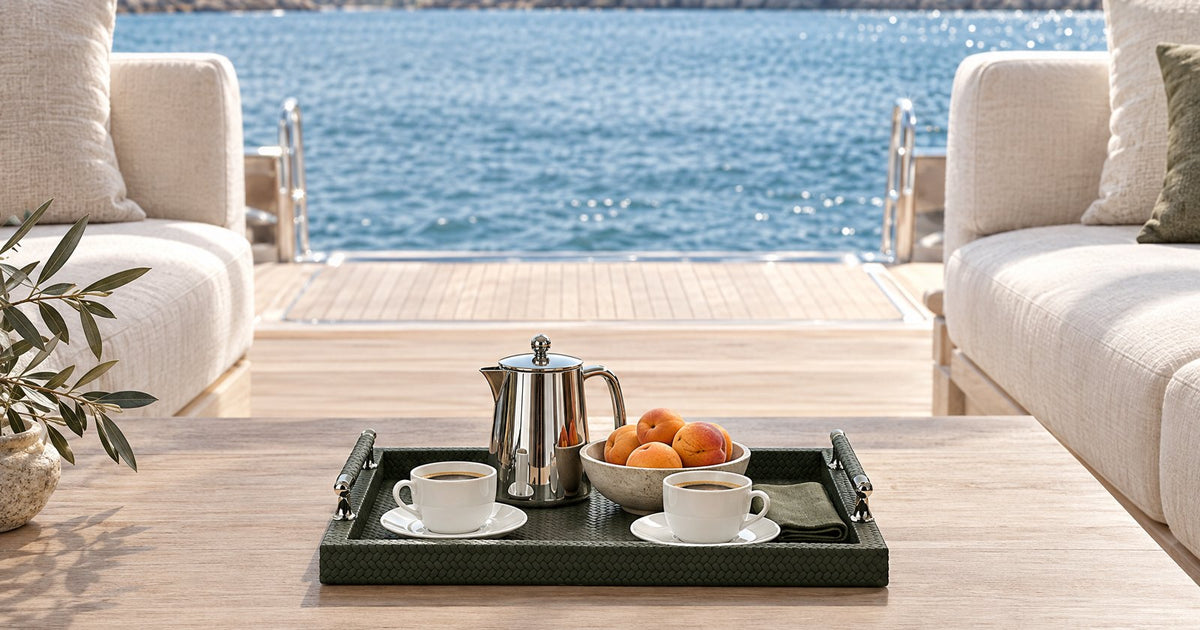
After service in the cockpit, a crew member wipes a coffee ring and a film of salt spray from the serving tray. Dew settles on deck overnight, and a lower-deck cabin stays humid with the hatches shut.
These are the conditions behind the claim that leather cannot live on a boat. Leather care on a yacht is the routine that limits what salt, water, light and humidity do to leather pieces aboard. It works through wiping, drying, placement and moving air, not products. The room-by-room guide to yacht accessories covers where each piece belongs.
Salt from sea spray can mark leather. The US National Park Service (NPS) notes that objects exposed to the sea can retain salts. In leather, salt may show as a faint white, irregular tide line where it soaked in and dried. Veyra Deck's care routine is simple: wipe leather with a soft, slightly damp cloth, then dry it.
No conservation source cited here sets a routine for sea salt on leather. The general advice in the Leather Naturally care guide is to clean dirty leather "with a brush and a damp cloth", and to let wet leather dry naturally.
See the care and maintenance page for the daily routine.
Below deck, humidity and leather meet in one problem: mould. The Canadian Conservation Institute (CCI) says mould requires relative humidity above 65% to grow, and that good humidity control and moving air will prevent an outbreak. Over the oceans, relative humidity is roughly 80%, according to NOAA scientist Isaac Held.

Mould on leather generally grows after two days at 90-100% relative humidity, 10 days at 80% and 100 days at 70%, according to CCI Notes 8/1. A 3°C change in temperature shifts relative humidity by 10%, the CCI notes. As a closed cabin cools at night, its relative humidity rises. For keeping leather, the CCI recommends a stable relative humidity of 45% to 55%.
Practical Boat Owner calls good ventilation "probably the best natural weapon against damp". Owners who run a dehumidifier should heed the magazine's warning: some cheaper domestic models have caught fire when left unattended on board.
The head adds steam from the shower. Keep a hand-woven leather towel basket there in moving air, with dry towels only. See the bath collection.
Prolonged direct sun can fade and dry leather, and the damage adds up. The Canadian Conservation Institute warns that direct sunlight or daylight "can cause discolouration, desiccation, and photo-chemical degradation", and that light damage is cumulative and irreversible. Aboard, keep leather off sunlit sills and away from windows, skylights and heat.

The CCI warns that "painted or dyed leather can be extremely light-sensitive". Heat is a separate risk: the NPS says "heating dries out, embrittles, and deforms skin and leather objects."
To protect leather from sun and heat aboard, watch where light falls through the day. A lidded box such as the Leather Box with Mahogany Lid, Small, belongs on a shaded dresser. See the leather boxes.
Water reaches leather aboard as spills, spray and condensation. The US National Park Service says direct wetting starts to damage leather and skin, which have "only a limited degree of water resistance". Blot spills straight away and wipe with a slightly damp cloth. Wet leather should dry naturally, away from heat, Leather Naturally advises.
Condensation needs no spill. The US National Weather Service defines the dew point as "the temperature to which air must be cooled in order to reach saturation". Air touching a cold glass is cooled below its dew point, NOAA explains, and its water vapour condenses onto the glass.
Give cold glasses a coaster, and wipe a tray after a drinks service. The bar accessories buying guide covers ice buckets and steel in salt air.
Leave conditioners, dressings, oils, saddle soap and household cleaners off leather aboard. The Canadian Conservation Institute says museums now minimise dressings, lubricants and cleaners because of their "negative long-term effects on the leather". Saddle soap, it adds, is "very alkaline, which causes degradation of the leather".
The NPS agrees, advising against cleaners, dressings, waxes and coatings: "they are not beneficial and will complicate future conservation treatment." Dressings can also trap moisture in leather's fibres and create ideal conditions for mould, the NPS notes.
Follow the care and maintenance page, which draws the same line: no abrasive pads, solvents, alcohol or household chemical cleaners; they strip the finish.
Leather care on a yacht follows the boat's calendar. Wipe pieces after each service, and look closely for salt after a passage or charter week. Before laying up, clean, dry and stow them; after storage, air them and check for mould.
| Task | When | Why |
|---|---|---|
| Wipe with a slightly damp cloth, then dry | Daily, after service | Spills and spray come off before they dry in |
| Look for white tide lines; wipe, then dry | After a passage or a charter week | Salt can show as a faint tide line (NPS) |
| Clean, dry and stow in a dry locker | Before laying up for winter | Mould needs relative humidity above 65% (CCI) |
| Air each piece and check for mould | After a long spell in storage | Mould can grow in 10 days at 80% relative humidity (CCI) |
Plan these tasks around the superyacht season calendar, from crossings to yard periods.
Leather works aboard wherever it can be wiped, dried and kept from standing water and long sun. Four Veyra Deck pieces show how, from service in the cockpit to towels in the head, and none of them needs a conditioner or cleaner.
In the cockpit, a tray carries a full coffee or drinks service where spray and spills reach it. The Large Woven Leather Serving Tray with Stainless Steel Handles is 50 x 37 x 3.5 cm, from $490, in eight colourways. The weave is embossed, not woven from strips. Wipe it after service; after spray, wipe the polished stainless steel handles with fresh water and dry them.
On the table, loose coasters scatter when the boat moves. The Woven Leather Coaster Set with Stainless Steel Stand, set of 6, from $180, in eight colourways, keeps all six in their stand. Wipe each coaster and let it dry before it goes back.
In the head, a basket holds dry towels. The Hand-Woven Leather Towel Basket, 36 cm, is 36 x 36 x 24 cm, from $600, in eight colourways. It is the only hand-woven piece here: the leather strips are its structure. Keep air moving around it, dust between the strands with a soft brush, and never pull at the weave.
On a cabin dresser, a lidded box keeps small things together. The Leather Box with Mahogany Lid, Small, is 27.5 x 20 x 5.5 cm, from $310, in eight colourways, with a leather body covered by hand. Wipe the lid with a dry cloth and keep it clear of standing water.
Compare tray sizes in the leather tray buying guide, or see the tabletop collection.
A leather care checklist for the crew turns this guide into eight habits for leather pieces aboard, from the daily wipe to laying up. Each check follows a source cited above or the care and maintenance page, and none needs a care product.
Use the yacht guest cabin checklist for the rest of each guest cabin.
Leather can live aboard with simple care: wipe with a soft, slightly damp cloth; dry away from heat; keep to shade and moving air; skip conditioners. The five questions below cover boats, conditioning, seawater, salt marks and deck use, with the source behind each answer.
Yes. Leather on a boat meets salt, water, light and damp air, so wipe it, dry it and keep it out of long sun. Mould needs relative humidity above 65% to grow, the Canadian Conservation Institute says, so keep air moving below deck.
No. The Canadian Conservation Institute no longer generally recommends leather dressings or saddle soap, and calls saddle soap very alkaline, which degrades leather. The US National Park Service adds that dressings can trap moisture and create ideal conditions for mould. A soft, slightly damp cloth is enough.
Treat soaked leather gently: the US National Park Service's salvage guidance warns that "wet leather is fragile". The guidance advises padding the leather with towels to hold its shape and letting it air-dry, with fans that do not blow directly on it. Leather Naturally rules out a hairdryer, a radiator and direct sunlight. Once dry, check for a salt tide line.
Salt stains on leather can show as a faint white, irregular tide line, the US National Park Service notes. No conservation source cited here sets a salt-removal routine. Follow Veyra Deck's care routine: wipe with a soft, slightly damp cloth and dry immediately. Leather Naturally warns that rubbing too hard on stubborn stains may damage the surface.
Not for long. The US National Park Service says leather has only a limited degree of water resistance. The Canadian Conservation Institute warns that direct sunlight can discolour and dry it. Bring leather pieces in after service. For long periods out of use, Veyra Deck's care page advises stowing them in a dry locker.
Start with three Veyra Deck pieces for service, glasses and towels. The Large Woven Leather Serving Tray with Stainless Steel Handles, from $490, carries a full coffee service. The Woven Leather Coaster Set with Stainless Steel Stand, from $180, catches the condensation. The Hand-Woven Leather Towel Basket, 36 cm, from $600, belongs in the head. Then see the tray collection.
Pieces are held in stock and ship from Türkiye within 1-2 business days. Delivery typically takes 4-15 business days depending on the destination. Shipping is free worldwide. Orders ship Delivered Duty Paid (DDP): we pay customs duties and import taxes, so the checkout price is the total. Nothing is charged on delivery.
Bespoke sizes and finishes are available for yacht and contract projects: info@veyradeck.com. For trade orders, see wholesale.
Sources
Sources checked 28 September 2026. Sourcing follows our editorial standards.
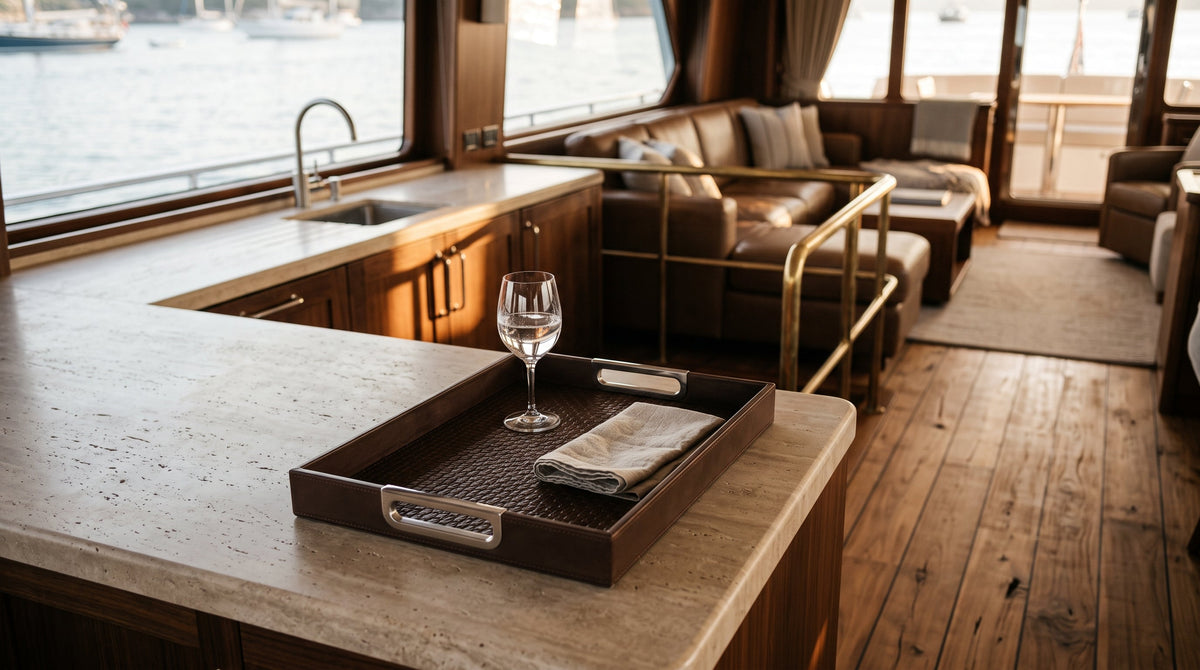 Superyacht Interiors 2026: Trading Gloss for Touch
August 2026Why superyacht interiors in 2026, from Cannes to Monaco, are trading high-gloss polish for honed stone, unlacquered brass and hand-finish...
Superyacht Interiors 2026: Trading Gloss for Touch
August 2026Why superyacht interiors in 2026, from Cannes to Monaco, are trading high-gloss polish for honed stone, unlacquered brass and hand-finish...
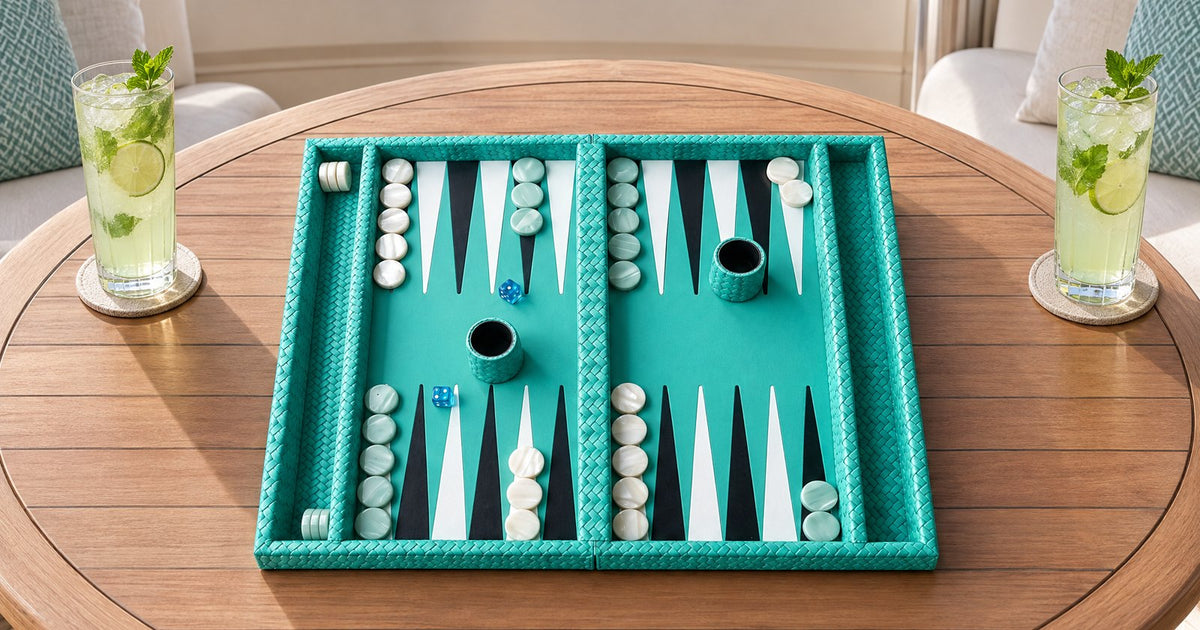 Leather Backgammon Set Guide: Set Up, Play and Stow Aboard
September 2026Leather backgammon set guide for yachts: board set-up, USBGF rules, hitting odds, dice cups, tavla history and a folding board that stows...
Leather Backgammon Set Guide: Set Up, Play and Stow Aboard
September 2026Leather backgammon set guide for yachts: board set-up, USBGF rules, hitting odds, dice cups, tavla history and a folding board that stows...
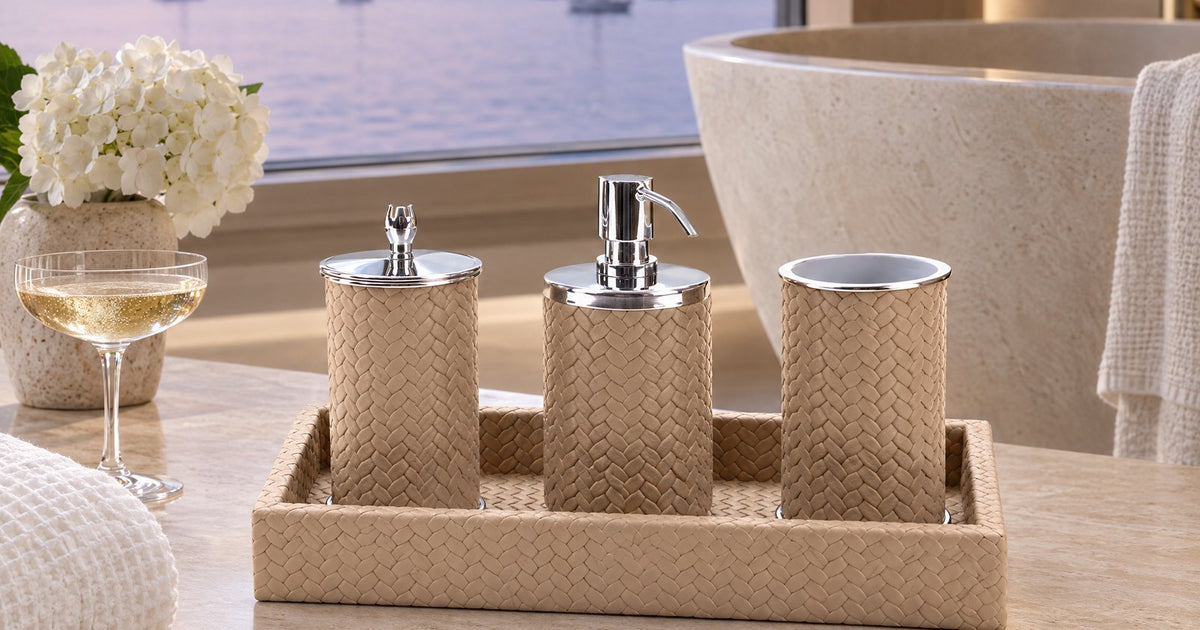 Yacht Guest Cabin Checklist: Prepare, Service and Stow
September 2026Yacht guest cabin checklist for crew and owners: the walk-through, bedside, heads, preference sheet, turndown and stowing before the yach...
Yacht Guest Cabin Checklist: Prepare, Service and Stow
September 2026Yacht guest cabin checklist for crew and owners: the walk-through, bedside, heads, preference sheet, turndown and stowing before the yach...