Your cart is empty
Tax included and shipping calculated at checkout
Tax included and shipping calculated at checkout

Drawer menu

In brief
- The rooms on a yacht keep ship names: in BOAT International's glossary, the saloon is the lounge, the galley the kitchen and the head the bathroom.
- The US Naval History and Heritage Command dates "head", the word for a ship's toilet, to at least 1708.
- BOAT International writes "Main saloon" and Bluewater "Main Salon" for the main-deck lounge. The American Heritage Dictionary gives the ship sense under "saloon"; the National Marine Manufacturers Association's glossary lists "salon".
- A passenger ship is usually defined as one carrying more than 12 passengers, says the International Maritime Organization. YachtCharterFleet ties the 12-guest ceiling on many charter yachts to that threshold.
- Before a first charter, read the guide to crewed yacht charter etiquette next: it covers the preference sheet, shoes and life aboard.
A deck plan and a preference sheet can put a salon, a VIP, a day head and a sky lounge in front of a first-time guest. Neither explains them.
The rooms on a yacht are the salon, the galley, the staterooms or cabins, the heads, the bridge or wheelhouse and the crew quarters. In plain words: the lounge, the kitchen, the bedrooms, the bathrooms, the command centre and the crew's own accommodation. BOAT International's glossary defines each of these yacht interior terms, and also lists a sky lounge, a sundeck and a beach club.
The salon is the main indoor lounge on a yacht. BOAT International's glossary defines the main saloon as "The primary indoor lounge and social space on the main deck". It calls the main deck "often the first deck you step onto". Bluewater's crew glossary lists the same main-deck lounge as "Main Salon".
Saloon vs salon is a difference of usage, and none of the sources here states a rule. The American Heritage Dictionary gives the ship sense under saloon: "A large social lounge on a passenger ship." It derives saloon from the French salon.
The US National Marine Manufacturers Association's boating glossary lists "salon" and no saloon. In Power & Motoryacht, columnist Bill Prince gave his own verdict in 2019: "Just call it a salon."
On materials, see superyacht interiors for 2026, from gloss to touch.

The galley is the kitchen on a yacht. BOAT International's glossary defines it as "The yacht's kitchen area", and the American Heritage Dictionary as "The kitchen of an airliner, ship, or camper." A pantry, in the ordinary sense given by the same dictionary, is a small room, usually off a kitchen, where food and tableware are stored.
Galley was a ship before it was a kitchen. The Online Etymology Dictionary records it in the 13th century as a "seagoing vessel having both sails and oars" and dates the cooking sense to 1750. Neither that source nor the American Heritage Dictionary says why the kitchen took the name.
Where the galley sits is not settled. In BOAT International's 2015 round-up of crew views, "Most crew dislike galleys placed below decks". The same article reports that "Other chefs prefer having a larger space lower in the boat where there is less motion". Both lines are crew opinion, not a survey.

A stateroom is a private sleeping room on a yacht, and a berth is the bed inside it. The American Heritage Dictionary defines a stateroom as "A private cabin or compartment with sleeping accommodations on a ship or train." It defines a berth as "A built-in bed or bunk, as on a ship or a train."
On stateroom vs cabin, the glossaries treat the two words as one room. Bluewater's crew glossary glosses stateroom as "Cabin" and adds that "superyacht cabins are increasingly called staterooms or suites on larger yachts". BOAT International heads a single entry "Cabin/stateroom/suite".
The Online Etymology Dictionary finds state-room as "a captain's cabin" in the 1650s, with "state" in the sense of "costly and imposing display". By 1774, the Online Etymology Dictionary records, the word meant a "small private sleeping apartment in a passenger ship".
In YachtCharterFleet's cabin guide, a VIP cabin "may either be the same size or slightly smaller than the Master suite", the owner's own cabin.
For the cabin itself, see the yacht guest cabin checklist.
The head is the bathroom or toilet on a yacht. The US Naval History and Heritage Command dates the term to "at least as early as 1708". It adds that the ship's toilet "was typically placed at the head of the ship near the base of the bowsprit".
The American Heritage Dictionary lists head as "The forward part of a vessel" and as "A toilet, especially on a ship." The US National Park Service calls a ship's very front "a typical toilet location that led to shipboard toilets being called" heads.
Dictionary.com's British block, sourced from Collins, marks the lavatory sense "(often plural)". Bluewater says that on superyachts "it's relatively uncommon to call a bathroom a head". It defines the day head as the "small toilet/washroom" guests use "when they want to avoid going back to their cabin".
The bridge is where a yacht is steered. The sky lounge is a second lounge, typically on the upper deck, and the sundeck is the highest deck. BOAT International's glossary calls the bridge "The command centre that houses the boat's steering wheel (helm) and navigation controls".
The American Heritage Dictionary defines the pilothouse as "An enclosed area, usually on the bridge of a vessel, from which the vessel is controlled when under way." It adds: "Also called wheelhouse."
BOAT International lists the "Skylounge or upper saloon" as "A second lounge, typically on the upper deck, offering panoramic views". It defines the sundeck as "The highest deck on a superyacht, often featuring a sunbathing or entertainment area". It defines the flybridge as "A secondary helm station on the uppermost deck, often with an open-air seating area".
The beach club is a lounge at water level, and the lazarette is a storage space. BOAT International's glossary defines a beach club as "A lounge space at water level, commonly featuring a bar, gym or spa". The American Heritage Dictionary has lazarette as "A storage space below deck or between decks on a ship or boat."
A 2022 BOAT International feature on beach clubs says designers "shifted the focus from the top deck" to "the lower deck, specifically the transom area".
BOAT International's glossary also defines the passerelle, the swim platform and the tender. The passerelle is "The retractable gangway used for boarding and disembarking". The swim platform is "An extended stern section at water level offering easy water access, often hydraulically adjustable". The tender is "A small boat stored on a superyacht, used to transport guests, crew and supplies to and from shore."
On open decks, see superyacht deck design for 2026.
The crew of a yacht live in crew cabins and eat in the crew mess, apart from the guest rooms. BOAT International's glossary defines crew quarters and crew mess together as "The area reserved for crew accommodation and dining, separate from the owner/guest spaces".
The UK notice that implements the crew accommodation standard of the Maritime Labour Convention (MLC) is MSN 1844, written for UK ships in general. It says mess rooms "must be located away from sleeping rooms and as close as practicable to the galley". For ships other than passenger ships, it requires "an individual sleeping room" for each seafarer. Ships under 3,000 gross tonnage may be exempted from either requirement.
A private yacht not normally used commercially sits outside the convention. The UK's guidance on the convention lists "ships not normally used in commercial activities" among the ships the convention "doesn't apply to". Large commercial yachts, it adds, follow Red Ensign Group (REG) Yacht Code accommodation standards "equivalent to those required by the MLC".
A charter yacht typically sleeps no more than 12 guests because of a passenger threshold, not its length. The International Maritime Organization says passenger ships are "usually defined as a ship carrying more than 12 passengers". YachtCharterFleet reports that many owners therefore "keep the maximum number of guests onboard to 12".
YachtCharterFleet's explanation is that "yachts that carry more than 12 guests are legally considered to be passenger ships". On international voyages, the International Maritime Organization says, passenger ships "must comply with all relevant IMO regulations, including those in the SOLAS and Load Lines Conventions". SOLAS is the Safety of Life at Sea convention.
The count is of passengers, not crew. The EU's passenger-ship safety directive, written for domestic passenger ships, excludes "the master and the members of the crew" from its definition of a passenger. YachtCharterFleet's figure is likewise 12 guests "(plus crew)".
The UK Maritime and Coastguard Agency publishes a notice on Part A of the REG Yacht Code. Part A applies to commercial yachts over 24 metres that "carry no more than 12 passengers". Yachts carrying more come under Part B.
That is the Red Ensign Group framework, and US domestic law uses different thresholds. Under 46 U.S. Code § 2101, an uninspected passenger vessel under 100 gross tons, chartered with crew, carries "not more than 6 passengers".
A yacht moves, so some of its fittings exist to hold objects and people in place. The American Heritage Dictionary records the fiddle, "A guardrail used on a table during rough weather". UK guidance for small commercial vessels asks for handholds and fastened lockers. None of these sources is specific to superyachts.
MGN 601 is UK guidance on crew accommodation for new commercial vessels under 200 gross tonnage, yachts included. It calls for "sufficient hand holds and grab rails within the accommodation". Stowage lockers containing heavy items need "lids or doors which are capable of being securely fastened".
In the sailing press, Practical Sailor wants galley cupboards with "locking latches to ensure that they don't come open unexpectedly" and fiddles around preparation counters.
Deck by deck, the rooms on a yacht typically run as follows. Guest cabins and crew quarters are on the lower deck, and the salon is on the main deck. The bridge and sky lounge sit above, with the sundeck on top. No single source gives the full list; the table combines several.
| Deck | Rooms typically found there | Sources |
|---|---|---|
| Lower deck | Guest cabins and crew quarters, typically (BOAT International); on larger yachts, likely the double and twin cabins (YachtCharterFleet); the crew mess, below decks near the crew cabins (a 2015 crew-view article, not a survey); the lazarette, in the stern under the aft deck (Bluewater); the beach club, at water level (BOAT International) |
BOAT International; YachtCharterFleet; crew views, 2015; Bluewater; BOAT International, 2022 |
| Main deck | Often the first deck a guest steps onto; the main salon, typically beside the formal dining room; on larger yachts, master and VIP suites, usually here or on the upper deck | BOAT International; Bluewater; YachtCharterFleet |
| Upper or bridge deck | The bridge; the sky lounge, typically; often further lounge areas | BOAT International; Bluewater |
| Sundeck | The highest deck, often with a sunbathing or entertainment area (BOAT International); Bluewater's entry lists sunbeds, a bar and a dining table among its fittings | BOAT International; Bluewater |
Galley position varies: the crew views quoted above pull both ways. The passages read for this guide do not place the pantry on a particular deck. On superyachts, Bluewater says, day heads "are located on the main and upper decks and occasionally on the sundeck". BOAT International lists "Upper deck" and "Bridge deck" as separate entries and does not say whether they are one deck. Bluewater places the bridge on "an upper deck".
Yacht room names at a glance: the table below has 21 rows, with what each term is, where the sources place it and who says so. Wall, ceiling and floor are bulkhead, overhead and sole. Each row carries its own source; "Not stated" means the passages read for this guide are silent.
| Term | What it is | Where sources place it | Usage note and source |
|---|---|---|---|
| Salon or saloon | Main indoor lounge | Main deck | "Main saloon" in BOAT International; "Main Salon" in Bluewater |
| Galley | The yacht's kitchen | Varies | BOAT International; position disputed in crew views, 2015 |
| Pantry | Small room, usually off a kitchen, for food, tableware and linens | Not stated | Ordinary dictionary sense only: American Heritage Dictionary |
| Stateroom or cabin | Private sleeping room | Guest cabins typically on the lower deck | "A private cabin or compartment" in the American Heritage Dictionary; one entry, "Cabin/stateroom/suite", in BOAT International |
| Master or owner's suite | Usually the largest cabin on board | On larger yachts, usually main or upper deck | YachtCharterFleet |
| VIP cabin | Same size as the master suite or slightly smaller | On larger yachts, usually main or upper deck | Single source: YachtCharterFleet |
| Berth | Built-in bed or bunk | Not stated | Also a space for a vessel to dock; from Middle English birth: American Heritage Dictionary |
| Pullman | Fold-down or pull-out bed | Often guest or crew cabins | BOAT International |
| Head or heads | Bathroom or toilet | Not stated | BOAT International for the definition; "(often plural)" in the Collins-sourced British block of Dictionary.com |
| Day head | Small toilet or washroom guests use instead of returning to a cabin | On superyachts, main and upper decks, occasionally the sundeck | Single source: Bluewater |
| Bridge or wheelhouse | Where the yacht is steered | An upper deck | "Bridge/Wheelhouse" in Bluewater; the American Heritage Dictionary defines the pilothouse as an enclosed area "usually on the bridge of a vessel" and adds "Also called wheelhouse" |
| Sky lounge | Second lounge | Typically the upper deck | "Skylounge or upper saloon" in BOAT International |
| Flybridge | Secondary helm station, often with open-air seating | Uppermost deck | BOAT International |
| Sundeck | Deck often used for sunbathing or entertainment | Highest deck | BOAT International |
| Beach club | Lounge space, commonly with a bar, gym or spa | Water level | BOAT International |
| Lazarette | Storage space | In the stern, under the aft deck | Bluewater; from Italian lazzaretto, under the headword lazaretto in the American Heritage Dictionary |
| Crew mess and crew quarters | Crew dining and accommodation | Crew quarters typically on the lower deck | Separate from owner and guest spaces: BOAT International |
| Bulkhead | Wall: an upright partition dividing a ship into compartments | Between compartments | American Heritage Dictionary |
| Overhead | Ceiling: the top surface in an enclosed space | Not stated | American Heritage Dictionary |
| Sole | Floor: "The deck floor." | Not stated | Single source: National Marine Manufacturers Association glossary |
| Fiddle | Guardrail that stops things slipping off in rough weather | On a table | American Heritage Dictionary |
To read a deck plan, work through it deck by deck and translate each label into the plain word. The six steps below follow the order a guest meets the yacht: main deck first, then cabins, guest numbers and the crew area.
The five questions below cover the salon, the head, staterooms and cabins, the sky lounge and guest numbers. Each answer stands on its own and names the dictionary, glossary or public body behind it. The sections above give the fuller sourcing for each term.
A salon is the living room on a yacht: the main indoor lounge. BOAT International's glossary spells it saloon and defines it as "The primary indoor lounge and social space on the main deck". The US National Marine Manufacturers Association's glossary lists it as "salon".
A boat bathroom is called the head because the ship's toilet was typically placed at the head, or forward part, of the ship. The US Naval History and Heritage Command places it "near the base of the bowsprit" and dates the term to at least 1708. The US National Park Service says that location led to the name.
A stateroom is a cabin, a private sleeping room on board, in the sources read for this guide. The American Heritage Dictionary defines a stateroom as "A private cabin or compartment with sleeping accommodations on a ship or train." Bluewater's crew glossary glosses stateroom as "Cabin" and adds that superyacht cabins "are increasingly called staterooms or suites on larger yachts".
A sky lounge is the second, upper lounge on a yacht. BOAT International's glossary lists the "Skylounge or upper saloon" as "A second lounge, typically on the upper deck, offering panoramic views". Bluewater's crew glossary calls it an "Upper salon".
A charter yacht typically sleeps up to 12 guests. YachtCharterFleet states: "Typically, superyachts for charter can accommodate 8 to 12 charter guests." Some larger yachts, it adds, "are certified to sleep more". The International Maritime Organization says passenger ships are usually defined as carrying more than 12 passengers. US domestic law, in 46 U.S. Code § 2101, uses different thresholds.
Once the rooms have names, how each one is outfitted for life on board is the subject of the Veyra Deck guide to luxury yacht accessories.
Sources
The 2015 crew-layout lines are crew opinion, not a survey. Sources checked 4 October 2026. Sourcing follows our editorial standards.
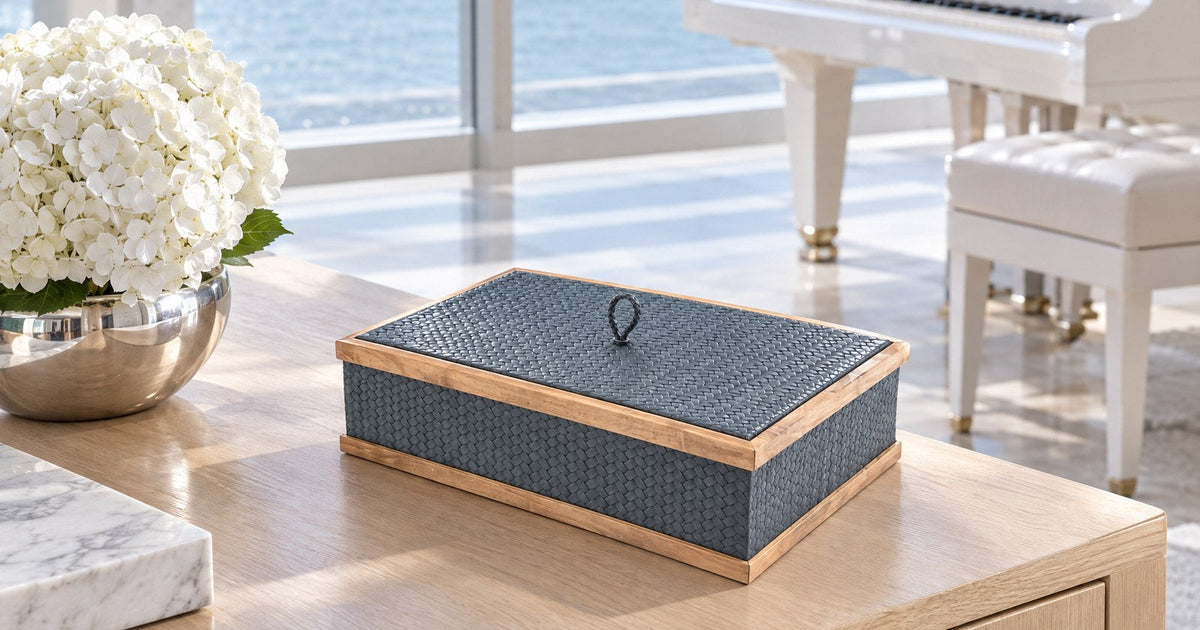 Leather Storage Boxes for Yachts: Which One for Which Space
October 2026Leather storage boxes for yachts compared: six lidded boxes with walnut frames or mahogany lids, sized in cm, plus a towel basket, hamper...
Leather Storage Boxes for Yachts: Which One for Which Space
October 2026Leather storage boxes for yachts compared: six lidded boxes with walnut frames or mahogany lids, sized in cm, plus a towel basket, hamper...
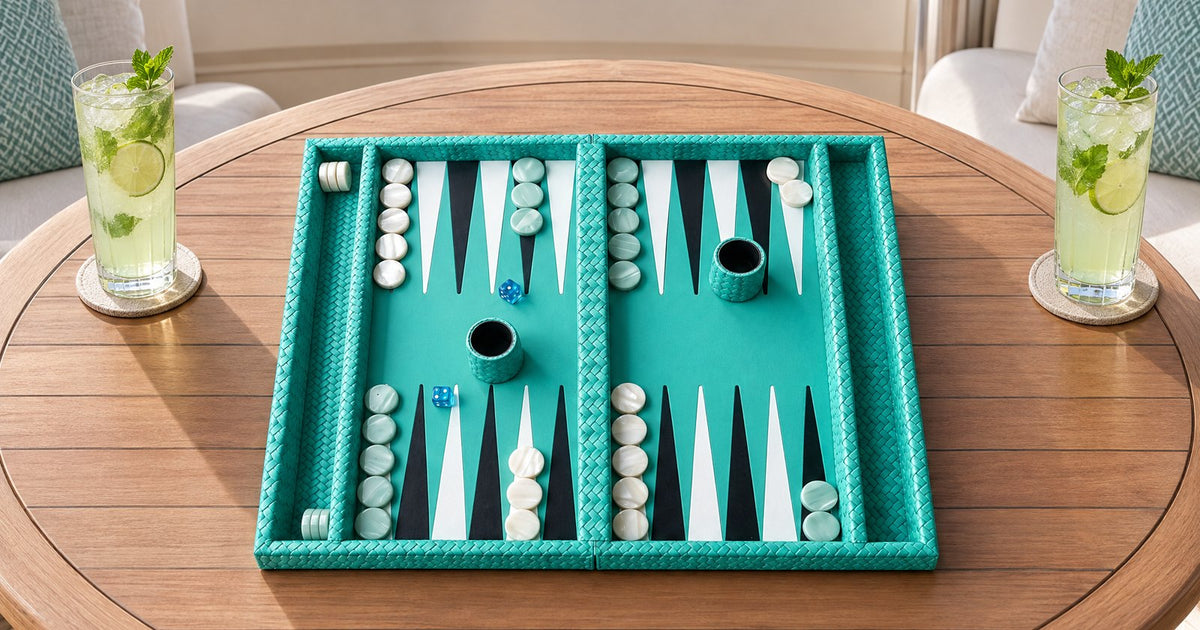 Leather Backgammon Set Guide: Set Up, Play and Stow Aboard
September 2026Leather backgammon set guide for yachts: board set-up, USBGF rules, hitting odds, dice cups, tavla history and a folding board that stows...
Leather Backgammon Set Guide: Set Up, Play and Stow Aboard
September 2026Leather backgammon set guide for yachts: board set-up, USBGF rules, hitting odds, dice cups, tavla history and a folding board that stows...
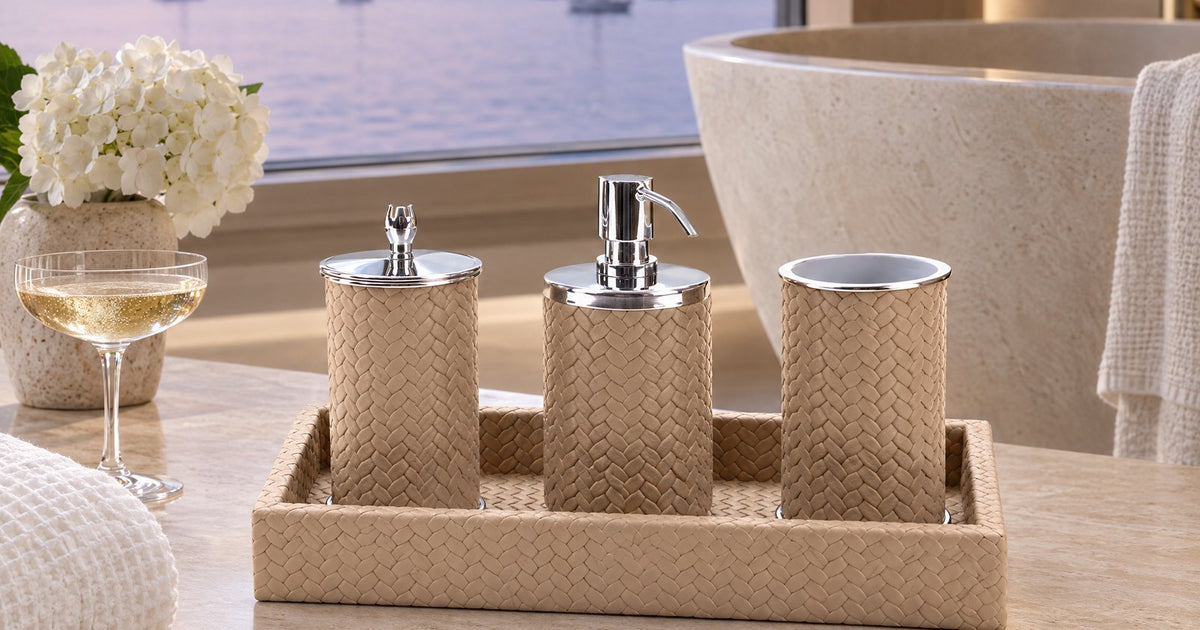 Yacht Guest Cabin Checklist: Prepare, Service and Stow
September 2026Yacht guest cabin checklist for crew and owners: the walk-through, bedside, heads, preference sheet, turndown and stowing before the yach...
Yacht Guest Cabin Checklist: Prepare, Service and Stow
September 2026Yacht guest cabin checklist for crew and owners: the walk-through, bedside, heads, preference sheet, turndown and stowing before the yach...